

🥦 Mental Training & Nutrition: The Invisible Force Behind Athletic Success
October 20, 2025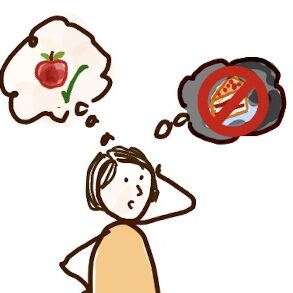
🥗 Why Labeling Food as “Healthy” or “Unhealthy” Does More Harm Than Good
Most people want to eat healthily — but in trying to do so, many fall into black-and-white thinking:
“This is good for me. That’s bad.”
This strict mindset often leads to guilt, frustration, and an unhealthy relationship with food.
But what if you could learn to eat again with ease, pleasure, and confidence?
🧁 A Familiar Scenario: Apple or Apple Pie?
Picture this: you’re working from home, and it’s 4 p.m.
You feel a little hungry.
In the fruit bowl, there are fresh apples from the local farm — healthy, right?
In the kitchen, there’s a piece of apple pie you saved from lunch — the “unhealthy” choice.
You like both.
But while you debate what’s “right,” the tension builds.
Eventually, you go for the pie — quickly, with a touch of guilt — hoping your mind won’t notice you picked the“wrong” food.
Sound familiar? You’re not alone.
🧠 What Nutrition Psychology Tells Us
Labeling food as healthy or unhealthy may seem helpful — but from a psychological perspective, it’s often harmful.
This kind of thinking leads to:
- 🌀 Feelings of guilt after eating
- 😣 Shame when “willpower” slips
- ⚖️ Loss of control or overeating episodes
- 💭 Constant mental stress around food choices
Eating isn’t a moral act — it’s a natural, enjoyable part of life.
No single food defines your health or worth.
🩺 The Science Behind It
As Paracelsus once said:
“The dose makes the poison.”
In other words, no food is inherently bad.
It’s the quantity, frequency, and overall balance that matter.
A piece of cake once in a while won’t harm your health — just as one apple won’t make you healthy.
When we forbid ourselves certain foods, we often lose the joy of eating, which can actually lead to more unhealthy patterns over time.
💫 From Restriction to Enjoyment
Let’s shift the focus from control and restriction to pleasure and awareness.
Because those who eat with genuine enjoyment tend to:
- Eat more mindfully,
- eat more slowly,
- and often eat less
The goal isn’t perfection — it’s developing a balanced and peaceful relationship with food.
🌈 Your Next Step
Would you like to free yourself from the constant healthy vs. Unhealthy mindset?
Do you want to reconnect with joyful, intuitive eating — without guilt or shame?
✨ I’d love to guide you on your journey toward a more colorful, balanced, and peaceful way of eating.
Together, we’ll find your personal path to less control and more connection.
🥗 Why Labeling Food as “Healthy” or “Unhealthy” Does More Harm Than Good
Most people want to eat healthily — but in trying to do so, many fall into black-and-white thinking:
“This is good for me. That’s bad.”
This strict mindset often leads to guilt, frustration, and an unhealthy relationship with food.
But what if you could learn to eat again with ease, pleasure, and confidence?
🧁 A Familiar Scenario: Apple or Apple Pie?
Picture this: you’re working from home, and it’s 4 p.m.
You feel a little hungry.
In the fruit bowl, there are fresh apples from the local farm — healthy, right?
In the kitchen, there’s a piece of apple pie you saved from lunch — the “unhealthy” choice.
You like both.
But while you debate what’s “right,” the tension builds.
Eventually, you go for the pie — quickly, with a touch of guilt — hoping your mind won’t notice you picked the“wrong” food.
Sound familiar? You’re not alone.
🧠 What Nutrition Psychology Tells Us
Labeling food as healthy or unhealthy may seem helpful — but from a psychological perspective, it’s often harmful.
This kind of thinking leads to:
- 🌀 Feelings of guilt after eating
- 😣 Shame when “willpower” slips
- ⚖️ Loss of control or overeating episodes
- 💭 Constant mental stress around food choices
Eating isn’t a moral act — it’s a natural, enjoyable part of life.
No single food defines your health or worth.
🩺 The Science Behind It
As Paracelsus once said:
“The dose makes the poison.”
In other words, no food is inherently bad.
It’s the quantity, frequency, and overall balance that matter.
A piece of cake once in a while won’t harm your health — just as one apple won’t make you healthy.
When we forbid ourselves certain foods, we often lose the joy of eating, which can actually lead to more unhealthy patterns over time.
💫 From Restriction to Enjoyment
Let’s shift the focus from control and restriction to pleasure and awareness.
Because those who eat with genuine enjoyment tend to:
- Eat more mindfully,
- eat more slowly,
- and often eat less
The goal isn’t perfection — it’s developing a balanced and peaceful relationship with food.
🌈 Your Next Step
Would you like to free yourself from the constant healthy vs. Unhealthy mindset?
Do you want to reconnect with joyful, intuitive eating — without guilt or shame?
✨ I’d love to guide you on your journey toward a more colorful, balanced, and peaceful way of eating.
Together, we’ll find your personal path to less control and more connection.